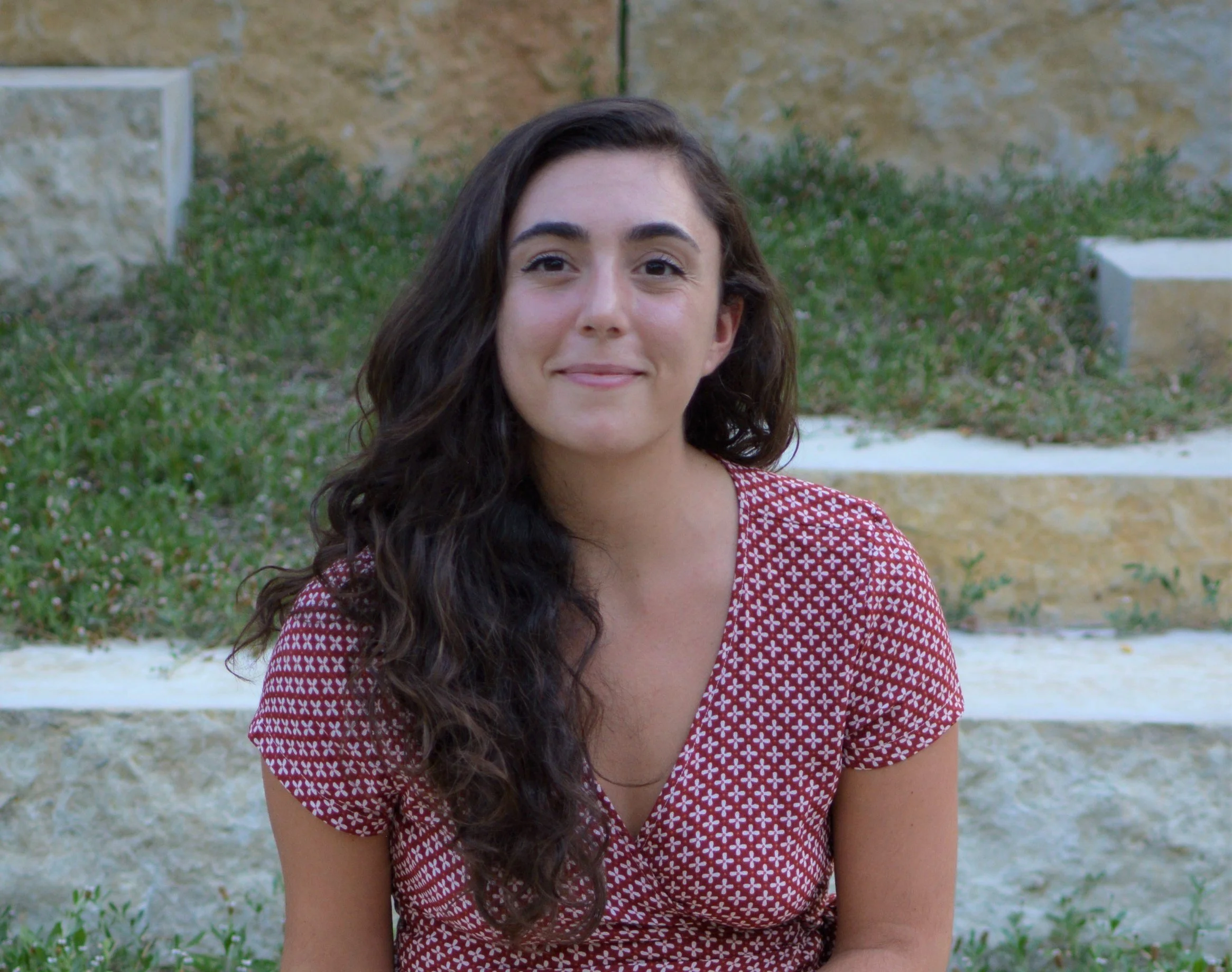
Hi, I'm Nicole.
I'm a Certified Sexological Bodyworker®, a trauma-informed somatic practitioner, intimacy educator, and someone who cares very deeply about what happens in the spaces we usually avoid talking about — sex, power, shame, desire, imbalance, and the quiet ways relationships start to feel heavy.
Most people assume I've always lived in my body. I didn't.
For a long time, I lived almost entirely in my head. I studied philosophy because I wanted to understand how humans build meaning — how we decide what's real, what's moral, what's valuable. I loved pulling systems apart. I loved seeing the hidden structures underneath things.
But when it came to actually feeling my own body? Actually being in the room with another human without bracing? That felt completely unreachable.
Looking back, I can see how much of my life was organized around staying safe through intellect. I could read a room with scary precision — I could feel power dynamics shift before anyone spoke — but I didn't know how to relax inside myself.
Somatics was the first thing that didn't ask me to think my way out of that. It gave me something I didn't even realize I was missing: a felt sense of safety. Not conceptual safety. Not "I understand my trauma" safety. Actual nervous-system safety.
And once that clicked, everything reorganized.
I was headed for public policy. Then my world took a drastic turn the first time I experienced presence for myself — I remember standing in awe of my own hands, the life running through them. After that, there was only one job I wanted: helping other people's bodies feel safe enough to find the clarity and presence mine had found.
I've always suspected it could have been any door I walked through to do that. I chose sex because I was in my early twenties with a rebel spirit — I loved shocking people, and I wanted to make a difference the hard way. But what kept me here is what I found on the other side: sexuality is where our patterns are most honest. It's where performance falls apart. It's where power shows up. It's where shame hides. It's where desire either flows — or shuts down. It's the one place where people can't not be real.
And over time, I started seeing the same thing over and over again. Pelvic pain. Low libido. Erectile dysfunction. Women exhausted from carrying the emotional weight of their relationships. Couples who love each other but feel strangely flat.
Different symptoms — same underlying structure.
The body adapts. Relationships adapt. And eventually those adaptations start to cost us.
What once kept you safe begins to mute your pleasure. What once kept the peace begins to erode attraction. What once made you "the strong one" slowly turns you into the manager instead of the lover.
That's when people start saying, "I don't know what happened."
But something did happen. A system reorganized around survival instead of aliveness.
And what's organized can be reorganized.
The Body Compass Method™ grew out of this. It's a structured way of working with the nervous system, erotic patterning, and relational dynamics so change isn't just insightful — it's embodied.
Most of the people I work with are smart. High-functioning. Capable. They've read the books. They've done therapy. They can explain their patterns beautifully. But they're tired of explaining. They want to feel different.
If that's you, you're not broken. You're just ready for work that doesn't bypass the body. Work that changes the way sex feels. The way conflict lands. The way attraction moves.
And once that shift begins, it doesn't feel theoretical. It feels like coming back online.
Your body is not like nature. It is nature.
Everything I've built — the Method, the Deep Body Archive™, the Sanctum — grows from one conviction. And it isn't a metaphor:
"The iron in your blood was forged in the belly of a dying star. Your blood salinity matches the primordial seas. The ocean never left you — you took it with you, in your bloodstream. You are not like the river. You are the river, pooled into a temporary shape."
— From the forthcoming bookThis is why your body's symptoms are never random and never dramatic. They follow patterns as precise and beautiful as anything in nature — the same laws that govern rivers, blooming, tides, and decay. When you learn to work with that organization instead of fighting it, tension unwinds, desire returns, and connection steadies. Like any living system, given the right conditions, it remembers how to thrive.
"I'm a want-to-be ecologist, an Erotic Fairy Greenwitch™, and your fierce advocate for erotic belonging in this world. I translate between the languages of moss and marrow, chlorophyll and kink, earth and intimacy, neuroscience and somatics."
— NicoleThe Body Compass Method™ is what years of watching the same pattern finally became.
Pelvic pain. Low libido. Erectile dysfunction. Emotional over-functioning. Attraction collapse. Different presentations — same structural roots. The Body Compass Method™ is a structured way of working with those roots, integrating nervous system regulation, somatic practice, Sexological Bodywork®, erotic mapping, and trauma-informed relational work.
Its complete curriculum lives in The Deep Body Archive™ — the signature course of the Method and the educational backbone of everything I do with clients.
This isn't about chasing pleasure or forcing chemistry. It's about restoring your ability to feel what your body is already signaling — and reorganizing around that truth instead of around survival.
My methodologies & training


A book is on its way.
"This book began the day I realized that what we call 'sexual dysfunction' was not a personal tragedy, but a cultural design. I had sat with too many clients who carried their diagnoses like life sentences, who had been offered protocols but never real answers. The problem was never their bodies."
I'm writing a full-length book on the Body Compass Method™ and the organic laws of pleasure — the story of why so many bodies have gone quiet, and the way back. It's woven from years of client work, ecology, neuroscience, and the conviction that runs through everything on this site: you are not broken. You never were.
Newsletter subscribers will hear everything first.
Join the newsletterOne philosophy. Three doorways.
Everything I've described on this page lives inside a connected ecosystem — enter through whichever door matches where you are.
Deep Body Sanctum: The Pleasure Immersion Program
Private Sexological Bodywork® and intimacy coaching — in person in Austin or fully online worldwide, for individuals and couples. Every journey opens with the Sanctum Blueprint: two sessions and a personalized map of your body and your goals.
Explore the program →The Deep Body Archive™
The signature course of the Body Compass Method™ — a complete somatic curriculum for understanding what your body has been trying to say, with practices for every lesson and the science underneath it all.
See inside the Archive →The Course Collection
Self-paced courses for the piece that matches where you are — desire, body image, couples dynamics, or the symptom no one has been able to explain. Begin with the free Missing Desire Kit.
Browse the collection →Also part of the ecosystem: the Nature of Pleasure podcast, the blog, resources for therapists, and the newsletter.
Start with a conversation.
A free 30-minute clarity call. You share where you are and what you've already tried; I tell you honestly whether this work is the right fit — and if it isn't, I'll point you toward what is.
Book your free clarity call